Plumbing 101
A developer's guide to home water systems
The Plumbing Manifesto
It is 11 PM. You hear a strange gurgling sound from the bathroom. The toilet is overflowing. Your partner is asking if you know how to fix it.
As developers, we debug code every day. But when water starts flooding your floor, suddenly we feel helpless. This guide changes that.
"Every developer should know three things: how to read documentation, how to use version control, and how to fix a running toilet."
— Ancient Wisdom
Plumbing is just another system. It has inputs, outputs, and edge cases. Once you understand the architecture, debugging becomes simple.
The Two Systems
Your home has two separate plumbing systems working together. Understanding the difference is crucial:
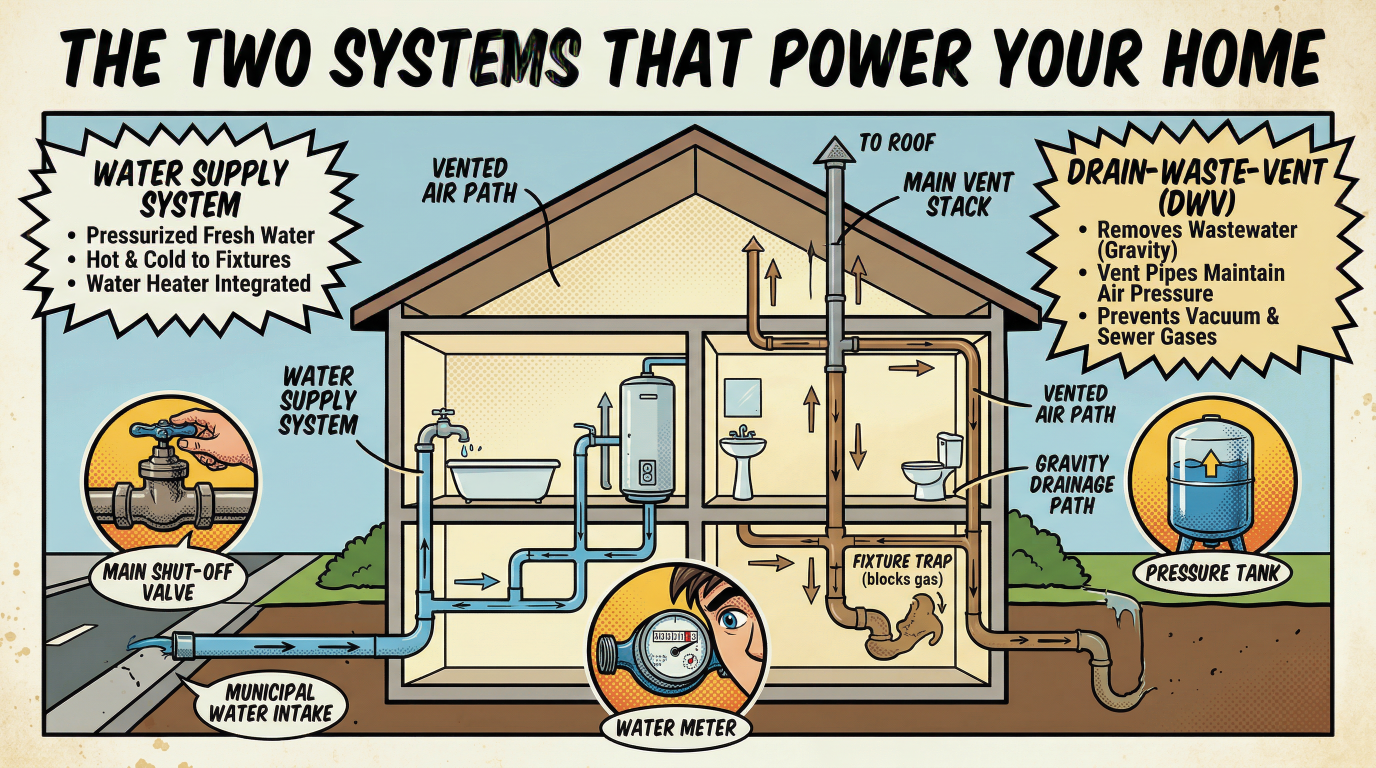
The DWV Components
- Drain: Carries wastewater away (needs 1/4" slope per foot)
- Waste: Connects to toilets and fixtures
- Vent: Prevents vacuum locks, allows air into system
Think of vents as exception handling—if there is no way for air to escape, your drains will gurgle and drain slowly. Just like your code needs error handling, drains need vents!
Know Your Pipes
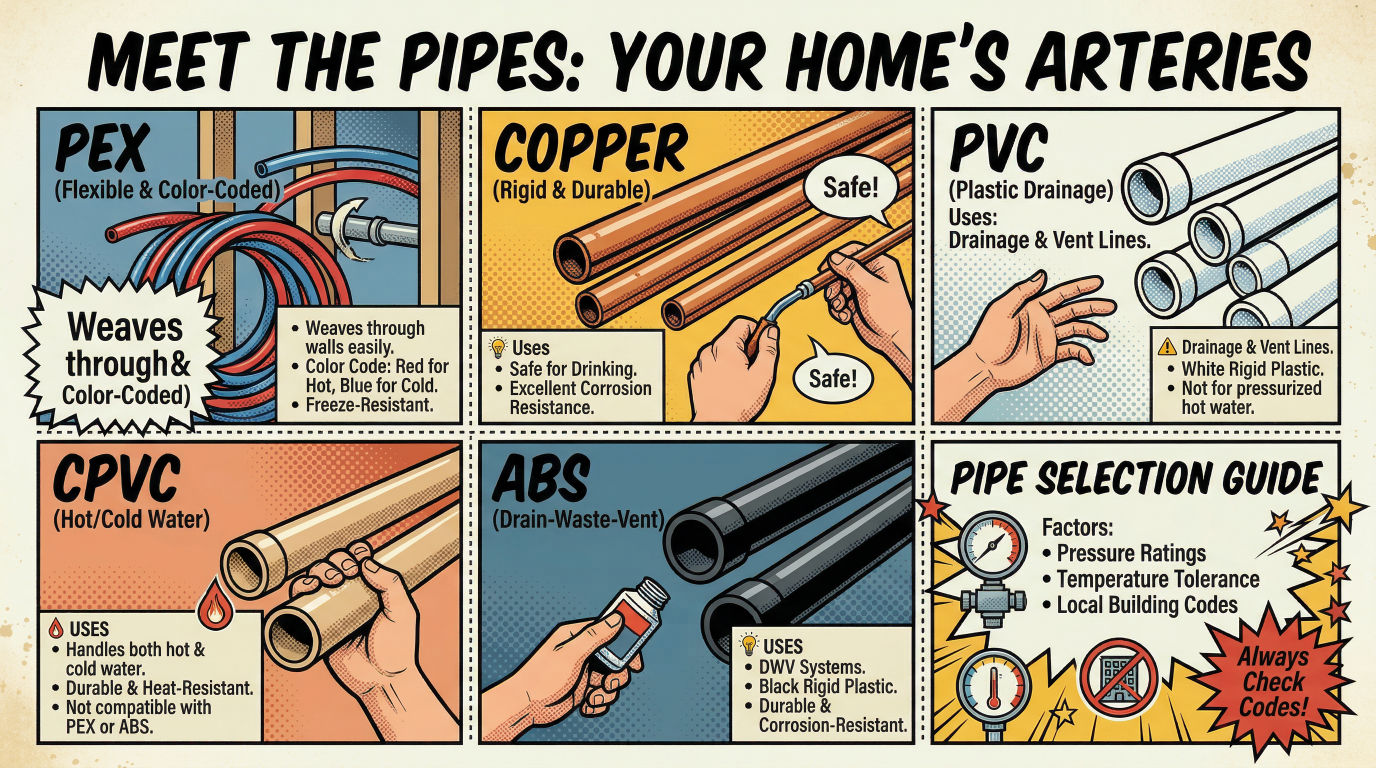
Different pipes for different jobs. Like choosing the right data structure:
PEX: The Modern Choice
PEX (Cross-linked Polyethylene) is the developer's favorite pipe. Flexible, easy to install, and forgiving.
Connection Methods
| Method | Difficulty | Cost |
|---|---|---|
| Crimp Rings | Easy | Low ($) |
| Push-Fit (SharkBite) | Very Easy | High ($$$) |
| Compression | Medium | Medium ($$) |
Copper: The Classic
Traditional plumbing done right. Copper has been the gold standard for decades.
Types of Copper
| Type | Use | Thickness |
|---|---|---|
| Type K | Underground, HVAC | Thickest |
| Type L | Interior water supply | Medium |
| Type M | Domestic water, heating | Thinnest |
PVC & CPVC: Drain & Supply
Plastic pipes for specific applications. Know the difference!
Toilet Mechanics
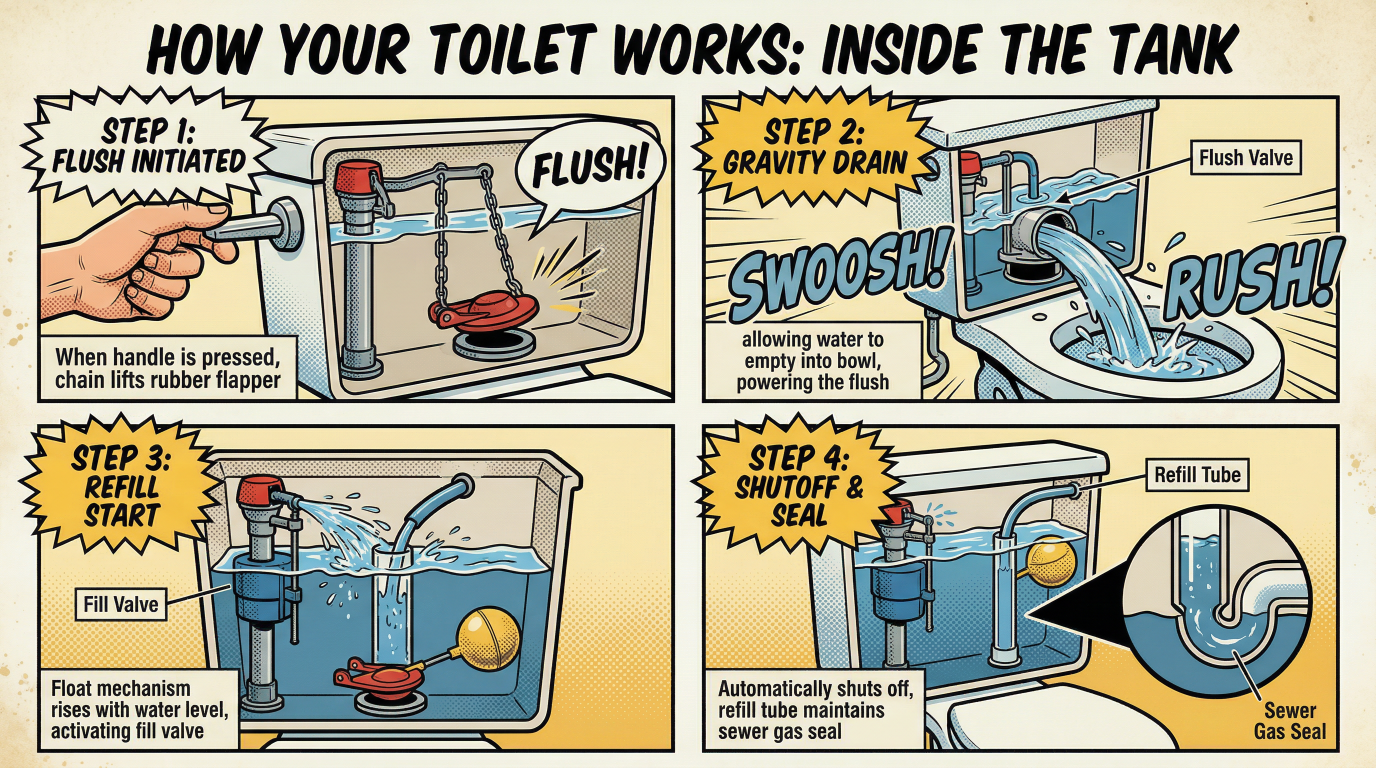
Understanding your toilet is like understanding your system's main() function—everything flows from here.
The Two Main Systems
Common Toilet Problems
| Problem | Cause | Fix |
|---|---|---|
| Running toilet | Bad flapper, bad fill valve | Replace flapper first (cheap) |
| Weak flush | Clogged rim holes, low water level | Clean holes, adjust float |
| Ghost flushing | Slow leak from tank to bowl | Replace flapper or flush valve |
| Rocking toilet | Loose bolts, bad wax ring | Re-secure or re-install |
The Flush Cycle
Understanding the sequence helps debug issues:
Fixtures & Faucets
Fixtures are where the system meets the user. Know your components:
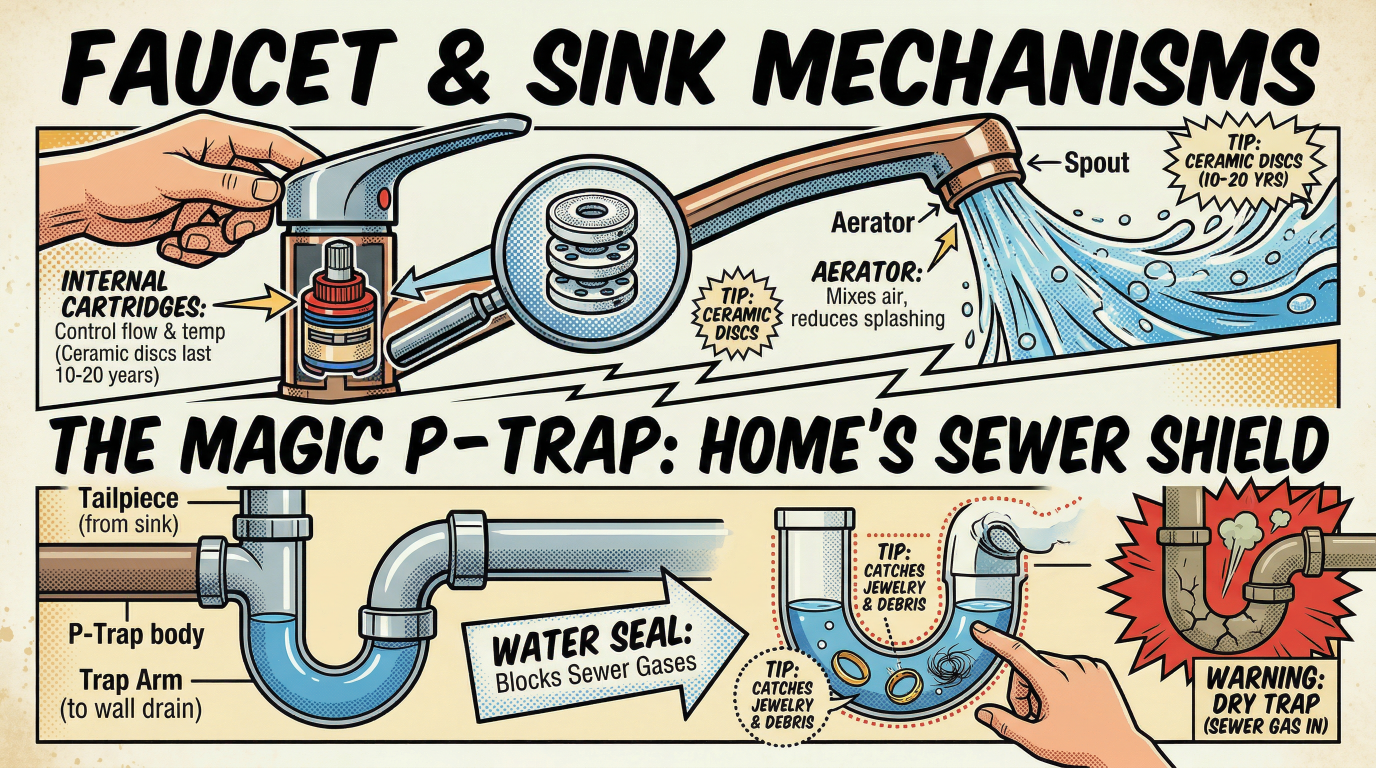
Faucet Types
| Type | How It Works | Common Issue |
|---|---|---|
| Ball Faucet | Single handle, ball mechanism | Spray leaks, worn seats |
| Cartridge | Single or double handle, pull-up | Worn O-rings |
| Disc Faucet | Single handle, ceramic discs | Cracked discs |
| Compression | Two handles, stem/washer | Worn washers (most common) |
Aerators
The little screen at the faucet tip. It:
- Mixes air with water (makes it feel "wetter")
- Reduces splash
- Can get clogged with sediment
The P-Trap: Your Sewer Shield
The P-trap is the most important fixture you never think about. It holds water to block sewer gases from entering your home.
Common P-Trap Issues
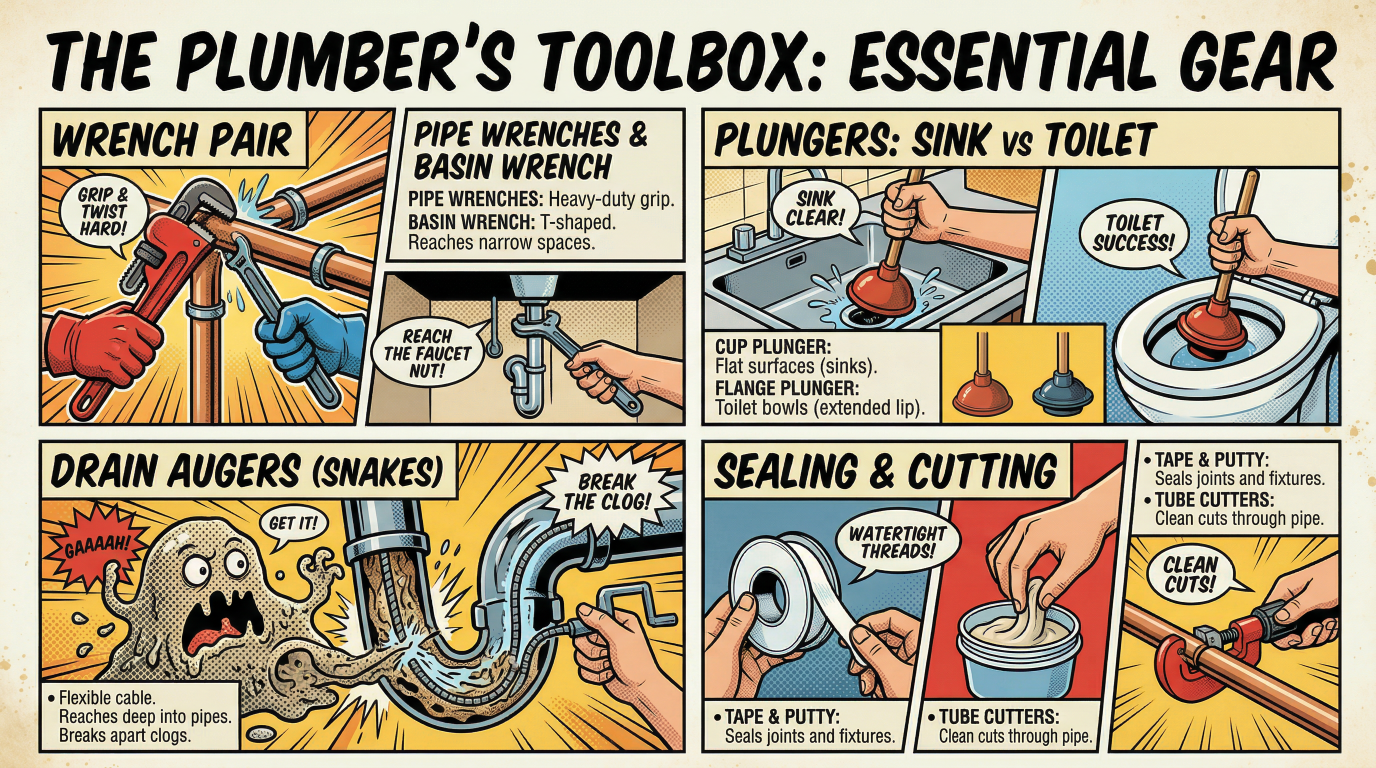
Essential Tools
Every developer needs their toolkit. Here is your plumbing IDE:
Common Clogs
Know your enemy. Different clogs need different strategies:
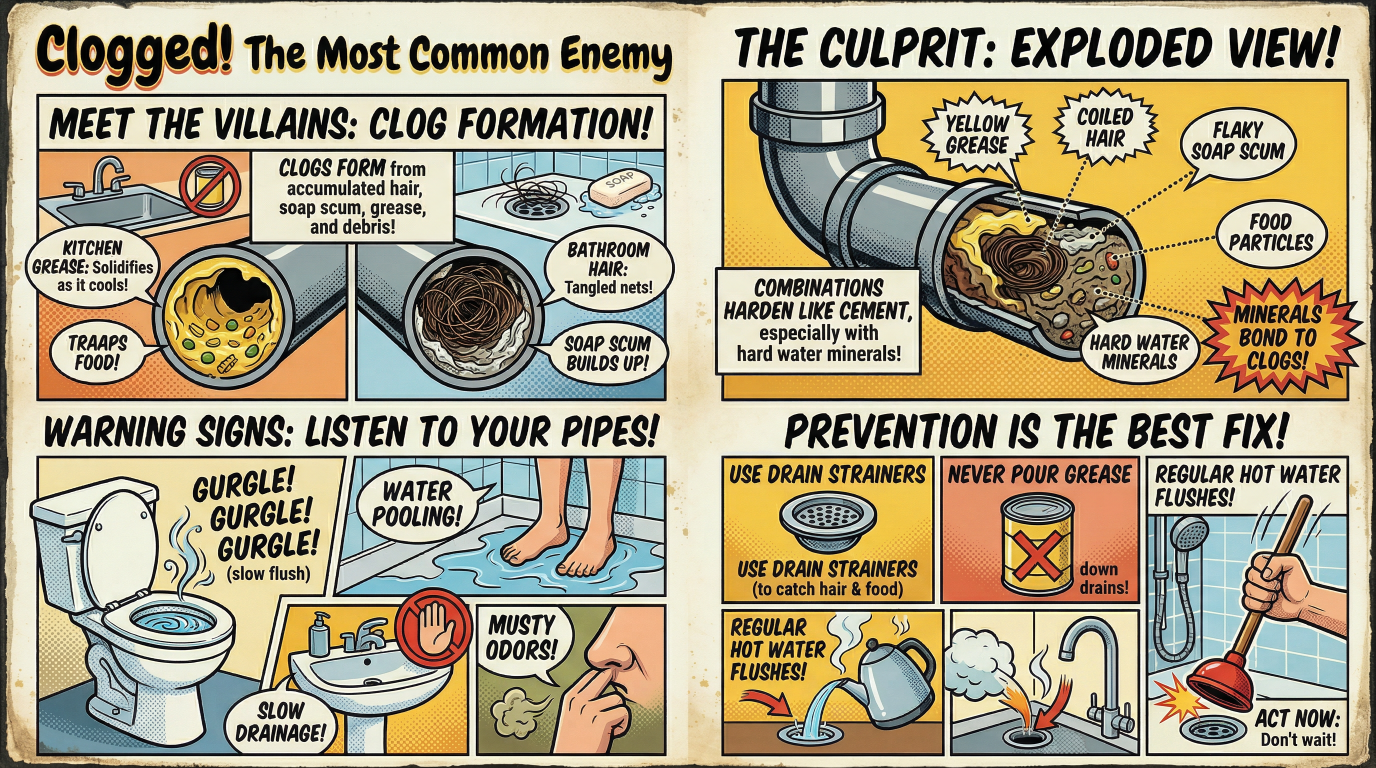
Mixes into sticky clumps that cling to pipes. The most common bathroom drain clog.
Hot grease pours in, cools and solidifies on pipe walls. Accumulates over time.
Too much paper or "flushable" wipes. Even "flushable" wipes do not break down!
The Clog Hierarchy
| First Try | Second Try | Last Resort |
|---|---|---|
| Plunger | Drain snake | Call plumber |
| Hot water | Baking soda + vinegar | Hydro jetting |
Emergency Cases
When water is going where it should not, act fast!
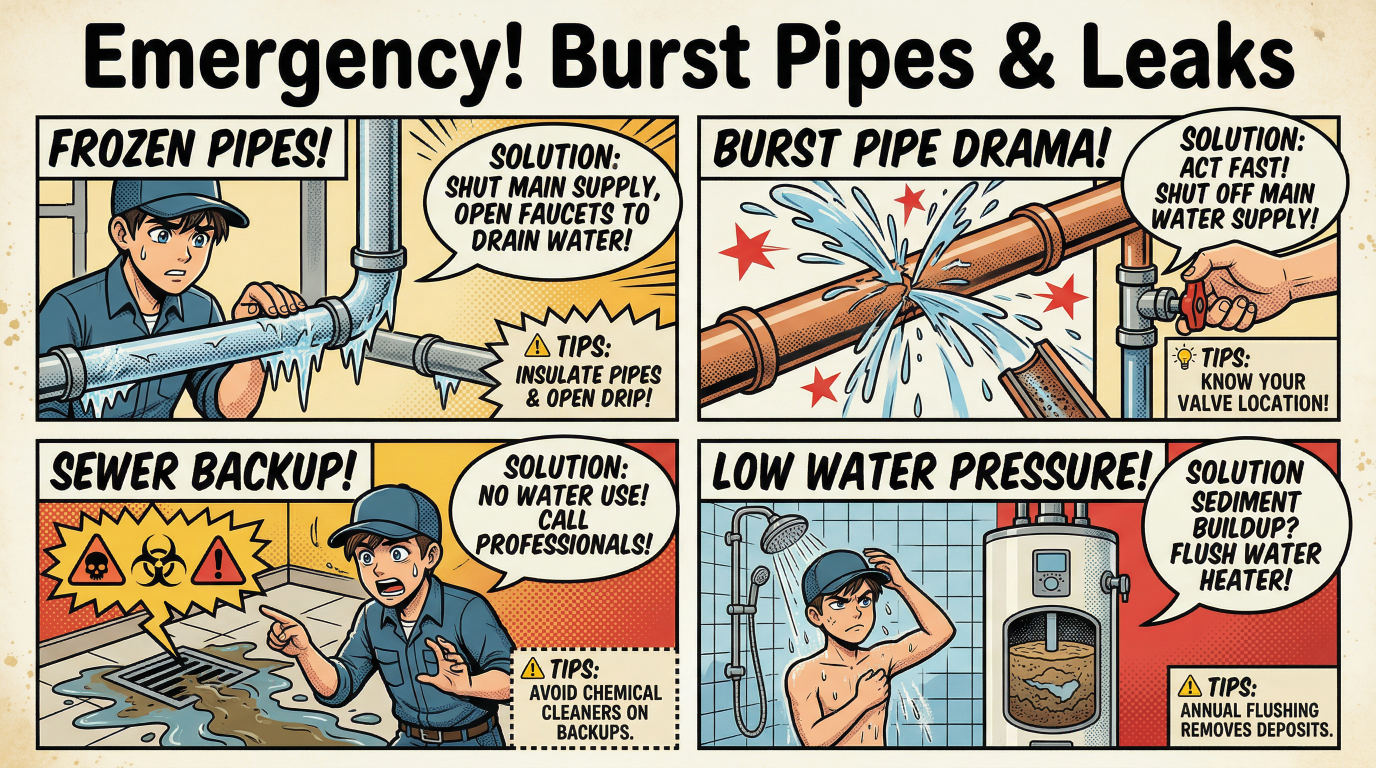
2. Open faucets to drain
3. Locate break
4. Temporary patch with pipe clamp or rubber + hose clamp
5. Call plumber
2. Push flapper DOWN to stop flow
3. Turn off supply valve behind toilet
4. Plunge or snake
5. Check float not stuck
2. Place bucket underneath
3. Assess if DIY fixable
4. Turn off main if major
5. Document for insurance
Leaking: Turn off gas/electric + water, call immediately
Strange noises: Sediment buildup, flush tank
Pressure relief: Test valve yearly
Maintenance Tips
An ounce of prevention beats a pound of flooded floors.
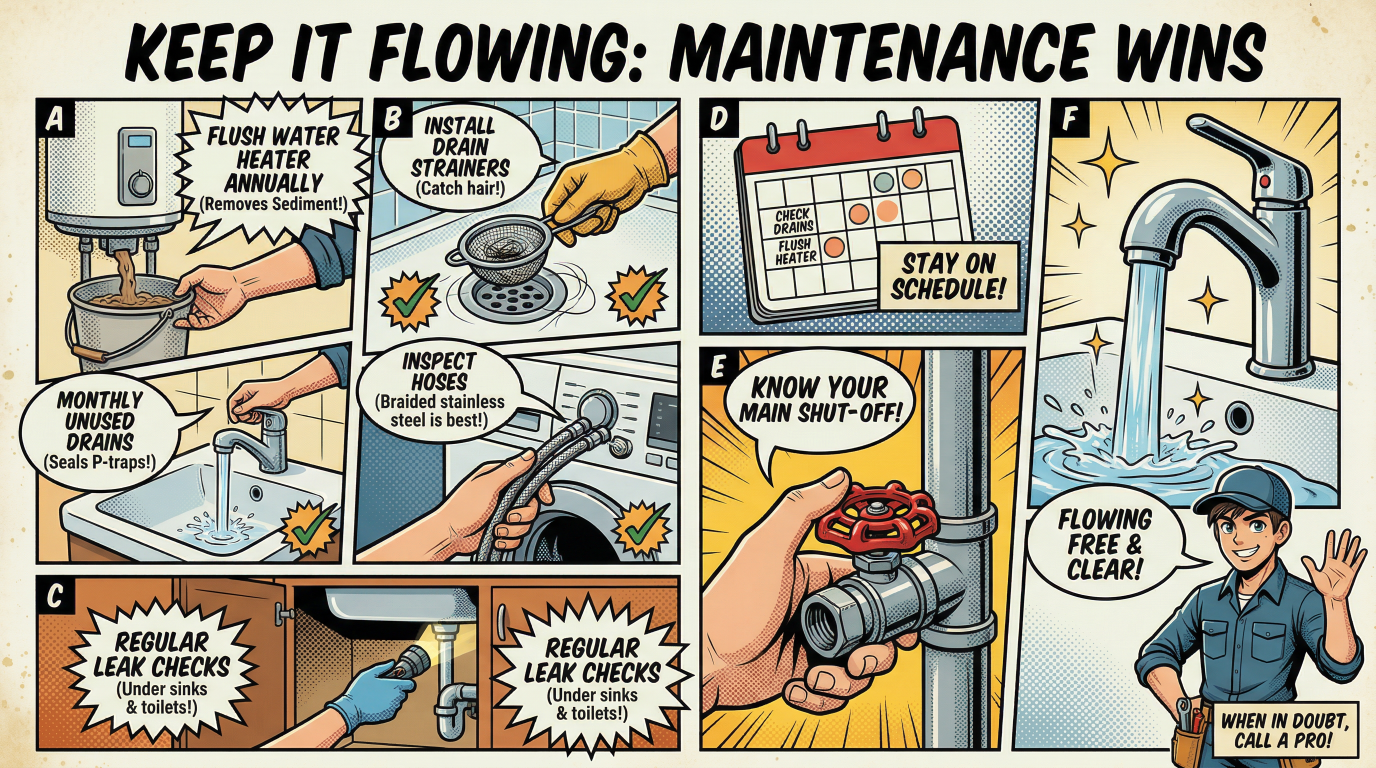
Water Heater Maintenance
Drain Care
- Weekly: Hot water flush (1 minute)
- Monthly: Remove and clean drain stoppers
- Quarterly: Baking soda + vinegar treatment
- Yearly: Inspect under-sink pipes for leaks
Prevention Checklist
"The best time to fix a leak was last year. The second best time is now."
— Every Plumber Ever